Peshawar: A pen-down strike was held on Tuesday at the Khyber Pakhtunkhwa Secretariat against Nek Muhammad, the Special Assistant to the Chief Minister of Khyber Pakhtunkhwa for Relief. During the protest, secretaries, officers, and staff demonstrated outside the Education Secretariat.
Nek Muhammad has been accused of entering the office of the Education Secretary on September 12 along with armed men, assaulting him, and confining him inside the office.
The protest was called by the PMS Association and the Secretariat Coordination Council.
PMS Association Khyber Pakhtunkhwa Chairman Nouman Wazir told Lok Sujag that their demand is the immediate registration of an FIR against the Special Assistant and his associates.
Nouman Wazir further said that no armed person would be allowed to enter the Secretariat in the future, and until a case is registered against the Special Assistant, government officers will not perform official duties in any district or Secretariat.
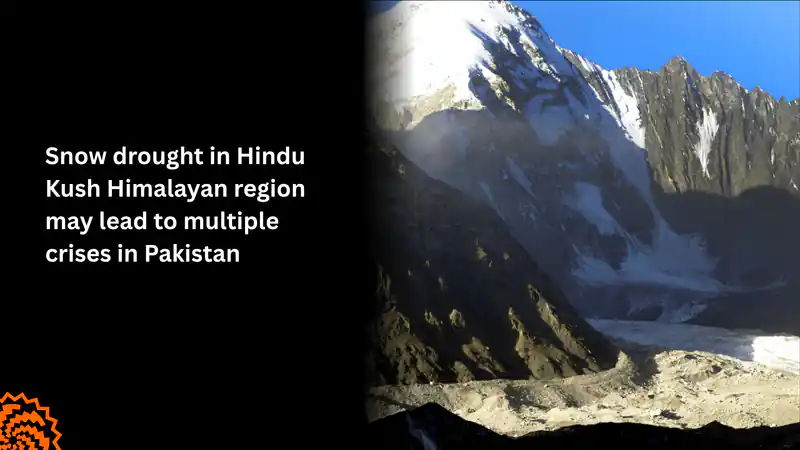
Chitral, Swat, Shangla, Dir and Mansehra are the areas where the onset of winter was considered incomplete without snowfall, but this time there was no sign of snow in these valleys until the end of December. This is not just a delay in the weather but a silent warning that has put water, agriculture, health and the economy at risk.
According to locals, due to the long break in the rains, while water scarcity is increasing, there is also an alarming increase in seasonal diseases .
Muhammad Karim, a resident of Chitral, is a witness to this change. He told Lok Sujag that where two to four feet of snow used to fall in the past, but now only a few inches of snow falls in some areas throughout the season and it disappears as soon as the sun starts appearing in its full swing.
According to him, the glaciers on the higher mountains, which used to have a white cover all year round, now either shrink a lot or are invisible at all in summers.
These concerns of Muhammad Karim and other residents are not just personal observations but have now become a scientific fact.
The 2025 report of International Center for Integrated Mountain Development (ICIMOD), a reputable international organisation based in Nepal that researches mountain areas and glaciers, supports their statements.
According to the report, snow in the Hindu Kush and Himalayan regions is not only falling in less quantity than before but it does not stay on the ground for long. Data shows that the duration of snow accumulation has reduced by about 23.6 percent in the last two decades, which is the lowest level in the last 23 years. The situation is no different in Skardu, the main city of Gilgit-Baltistan.
According to the Meteorological Department, the minimum temperature in Skardu till mid-December this year was -7 to minus -9 degrees Celsius, while in the past it used to fall to -15 to -18 degrees during the same period.
This increase in temperature indicates that the natural system of snowfall has been disrupted.
A study published in the renowned scientific journal Nature in 2025 also shows that the duration of snowfall in the Hindu Kush and the Himalayas is decreasing year by year, which experts are calling a 'snow drought'. This simply means that the days when the ground was covered with snow are now decreasing in the mountains. Which means that there will not be the required amount of water for the summer.
According to the recent assessments of the Pakistan Meteorological Department and its 'Seasonal Outlook Reports', the western monsoon is either arriving late or is very weak in the northern regions of the country. This glacial drought is having a direct and devastating impact on Pakistan's water resources. Tarbela Dam, which is the axis of the country's agriculture and power, has approached the dead volume several times in recent years between February and April.
According to the latest data (Dec 23, 2025), the inflow and outflow of water at Tarbela in the Indus River are almost equal (about 20,000 cusecs), while the dam level is at 1485.47 cusecs, which is not far from the dead level of 1,402 cusecs. This situation is a matter of concern because if there is no timely snowfall in the mountains, there will be a severe shortage of water in the rivers and canals in the coming summer, which will not only affect agriculture but also bring daily life to a standstill.
Describing the crisis, Attaullah, the executive engineer of the Public Health Department in Shangla, says that several government 'gravity water schemes' (natural water supply schemes) in tehsil Puran have dried up. He says that due to delayed snowfall and early melting, water cannot be stored and the natural springs of the land are drying up.
The effects of climate change have now reached the wards of hospitals. According to Dr. Muhammad Iftikhar, MS of Tehsil Headquarters Hospital Puran in Shangla, the presence of mosquitoes is unusual in the winter but now malaria cases are being reported.
“Along with this, there is a huge increase in patients with influenza and other seasonal diseases, which is a clear and dangerous sign of the changing climate.”
The seriousness of this condition is further clarified by the "State of the Cryosphere Report 2025" of the ICCI (International Cryosphere Climate Initiative). According to this report, the lack of snowfall in the Hindu Kush and the Himalayas is no longer temporary but a permanent threat.
Experts warn that if the global temperature increase reaches two degrees Celsius, 40% of the glaciers in these areas will disappear. However, if this increase is limited to 1.5 degrees, this loss can be prevented by 15%.
According to Dr. James Kirkham, the author of the report, policymakers now have to accept the facts because this acceleration in the rate of snowmelt can create food and political instability in the entire region, including Pakistan.
These alarming figures from global reports are also confirmed by Prof Dr Muhammad Qasim, an environmentalist at the University of Swat.
He told Lok Sujag that over the past 30 years, rainfall and snowfall in the northern regions of Pakistan have decreased by 40 percent. He says that Pakistan’s entire river system (Indus Water System) depends on glaciers and the snow it receives, and its decline means the collapse of the backbone of the country’s economy, i.e. agriculture.
Dr Qasim further explains that the effects of this glacial drought are multifaceted. It will not only affect electricity generation (hydropower) and tourism, but will also lead to environmental problems such as deforestation and the spread of new diseases.
Experts are unanimous that if there is no immediate and sustainable reduction in the emission of toxic gases at the global level, these effects will prove to be even more devastating in the future.
Glacial drought has now become not just a scientific term but a bitter reality. Now the question is not what is happening in the mountains, but the real question is, when this water and economic crisis arising from these mountains reaches the plains of Pakistan, how much will we pay for it?
Young men from Shangla leave home in search of work, not death. Yet for many families, migration ends in tragedy, as their loved ones return not with earnings, but in coffins. This is the human cost of unsafe and desperate migration for livelihoods.
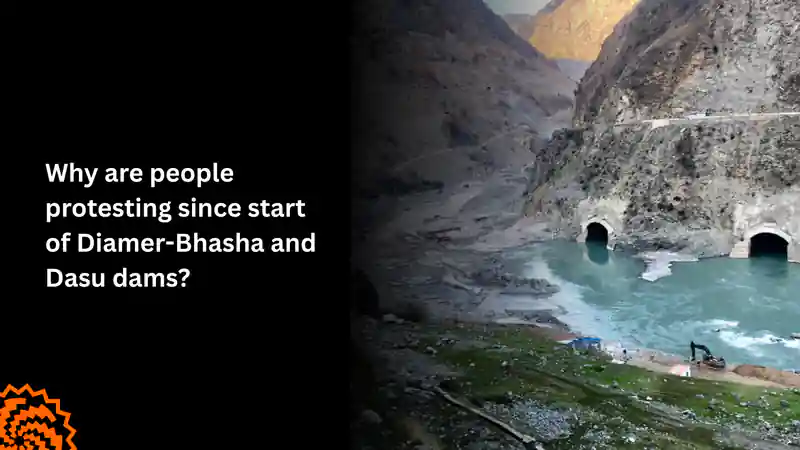
Two of the country’s largest hydroelectric power plants are currently being constructed on the Indus River in Gilgit-Baltistan and Khyber
Pakhtunkhwa. The Diamer-Bhasha Hydro Project is going to be one of the largest dams in Asia, being built at a cost of $3.5 billion at the confluence of GB and Khyber Pakhtunkhwa, 40km downstream from the district headquarters of Chilas. The dam will have a water storage capacity of 8.10 million acre-feet and a capacity to generate 4,500 megawatts of electricity.
The second hydropower, Dasu Dam, is being constructed in Upper Kohistan district of Khyber Pakhtunkhwa, 74km downstream from Diamer-Bhasha and 31km from Dasu city. This dam, to be built at a cost of about $2.5bn, will have a total capacity of 1.13 million acre-feet of water storage and 5,400 megawatts of electricity.
Since the beginning of the first phase of construction of both, i.e. the survey, the residents of the areas around the dams have been protesting intermittently. Demonstrations have been held in Chilas and sit-ins on the Karakoram Highway, with the protesters turning violent too, on occasions, injuring many people.
Thousands of people had to be displaced even before work on these projects began. Large jirgas were held in Abbottabad, the headquarters of Chilas and Hazara divisions, to resolve issues related to compensation for losses, but the affected people could not calmed, and threats of protests became an everyday affair.
Dasu Dam is being financed by the World Bank, while Diamer-Bhasha is being built by the Pakistani government with its own resources. However, the supervisory body for the construction of both is Water and Power Development Authority (Wapda). The victims allege that the promises made to them by Wapda and the administration were not kept.
The environmental impact assessment (EIA) report of the Diamer-Bhasha Dam gives its length to be 110km. The lake will be 128 sq km wide, of which 115 sq km would be submerged (surface area).
The last EIA report of the Diamer-Bhasha Dam was completed in 2010 but the survey of the population was completed in 2007-8. According to the statistics at that time, 22,479 kanals (2,810 acres) of agricultural land belonging to 4,135 households (the second survey says 4,310) were affected by the dam project. On average, 5.44 kanals of land per family was lost.
Apart from forests and gardens, more than 500,000 trees, including 284,000 fruit trees, were affected by the project, while more than 66,000 domestic animals were also counted in the project area. The Diamer-Bhasha project would indirectly affect 226 settlements. However, the direct victims include about 29,000 people from 31 villages, who lost 31,000 homes, 453 shops and 40 hotels, petrol pumps and other businesses.
The project would also submerge 94km of Karakoram Highway, 61km of connection roads, six suspension bridges, 24 primary schools, seven basic health centres and dispensaries and seven primary medical posts.
In addition, Gilgit-Baltistan will lose a large historical and cultural heritage, including 3,100 carved rocks. The dam’s environmental impact would also cause damage to wildlife and aquatic life and structures.
According to the World Bank's Assessment report (2014), 11,473 acres of land would be acquired for Dasu Dam, including 1,045 acres of agricultural land and pastures. This would displace about 7,000 people from 767 families living in 34 settlements.
In the project area, 50 shops, dozens of commercial buildings, businesses, seven schools, two primary health centres and three community centres would be lost. A 62km stretch of the Karakoram Highway, 22,000 trees, including 3,000 fruit trees, a 400-year-old mosque, 46 carved hills, a 202-acre private game reserve area, several bridges and connection roads are also going to be lost.
According to the assessment report, the entire 74km stretch of the Indus River from Diamer-Bhasha to Dasu Dam will practically turn into a lake. This can be estimated to affect the population on both sides. It is worth noting that a 250km long, 765kV (high voltage double circuit) transmission line is also being laid from Dasu to Islamabad West Grid to connect the electricity from Dasu Dam to the national grid, which will affect an area of about 5,000 acres.
The transmission plan is separate from the Dasu Hydro Project, which would make 1,088 rural families (7,749 people) lose their homes, commercial buildings, poultry farms and crops. As many 29,729 trees (including fruit trees and timber) will be cut along the route.
According to the data obtained from the district administration of Upper Kohistan, the land acquisition work for the Dasu Dam project has been almost completed. Only 625 acres of land remains to be acquired. However, there are possibilities of acquiring more land.
According to the EIA Diamer-Bhasha report, it was decided to implement both the Acquisition Act 1894 and the Resettlement Ordinance 2002 for land acquisition and compensation, but the victims were not satisfied with this procedure. During the survey, only 37pc of the households agreed to relocate to the proposed model villages, 10pc moved voluntarily, while 53pc of the households preferred to take cash in exchange for their houses.
The report states that protests began in Chilas in February 2010, which turned violent. After negotiations, a committee was formed to resolve the dispute, which included representatives of the GB administration, Wapda, the affected people.
The committee was headed by the deputy commissioner Diamer. After long discussions, it was decided that each affected family would be allotted six kanals of land in exchange for 5.44 kanals of agricultural land. Along with this, each married couple who became homeless would be given Rs4.7m under the enhance self-management relocation package, which is commonly known as the ‘Choolha Package’. This will be in addition to the payment of commercial assets.
As a part of the Bhasha Dam project, several promises were made for the victims under AL&R (Land Acquisition and Rehabilitation), including the construction of model villages, new connecting roads, water supply, sewage system, mosques, shopping centres, education, health and small hydro projects. Similarly, a stove package of Rs3.7m per family (married couple) was agreed upon for the Dasu Dam victims, along with other measures.
Sixty-seven-year-old Sahibzada lived in Kiga area of Upper Kohistan Upper, where his two wives lived in separate houses with their children. But now he lives in a rented house in Kamila Bazaar with both wives and married sons. His ancestral homes are now being replaced by a road to the Dasu Project and Karakoram Highway 2. He says that he has been forcibly evicted from his house. His two houses were declared as one, against which he filed a petition with the district collector, but did not get justice.
“Now I have approached the court, but I am getting court adjournments, while Wapda and administration representatives are making excuses for extending hearings. My two married sons have also received only one ‘Choolha Package’ (Rs3.5m) while nothing two houses and a shop were not compensated.”
Ziaul Haq, a resident of Diamer district, runs a sawmill and furniture factory in his village Thoril Nala. This village of 200 houses will be submerged in the lake of the Bhasha Dam.
Ziaul Haq says that Wapda has started the process of acquiring the village’s land and properties but no one has received any money yet. However, money for the stove package has been given where the work has started.
“My eight children are studying in schools and colleges, while I have no other source of income except the factory. I am very worried if the government takes away my land, factory and house without any compensation, what will happen to me?”
Ziaul Haq’s three brothers whose shops are on the Thoril Nallah Karakoram Highway are also hesitant like him.
The district administration record shows that out of the 36,000 acres required for Diamer-Bhasha, more than 32,000 acres (about 91pc) of land has been acquired so far while the remaining area, including 369 acres in Upper Kohistan, is still pending.
In the second week of February this year, the victims staged a protest in Chilas, claiming that more than 2,000 people were still waiting for payments under the package. The affectees said that they should be compensated for their houses, land and properties at the current market rates and the promised land (six kanals) should be allotted immediately.
Maulana Hazratullah, the leader of the Diamer-Bhasha Dam Affectees Committee, shows a 30-point charter of demands, saying that those who had received housing cheques under the 2010 and 2015 agreements should also be included in the ‘Choolha Package’.
“It has been years since the survey, now due to inflation and delays, the package amount should be doubled and the package should be given to all the married couples. The mistakes of the previous survey should be rectified and the necessary constructions that have been done after 2015 should also be paid for.”
He says education, health and residential facilities should be provided as promised. Wapda Model Colony Harbin Das should be completed and handed over to the people immediately. Under the agreement, all jobs from BPS-1 to 16 should be given to the youth of Diamer.
The demands include educational scholarships, increase in subsidy on wheat and regularization of temporary employees.
In a detailed response to the protest in Chilas, the spokesperson for Wapda says that the process of providing compensation to the victims of Diamer-Bhasha was completed in 2015. Only nine percent of the cases are left and work is continuing regarding that. He adds that out of 4,102 families, 3,826 have been paid for the ‘Choolha Package’. “However, as there is no water in the reservoir area yet, the locals are still living there even after getting the payments. Similarly, many premises, including shops, business centers, and petrol pumps, were not vacated by the occupants even after payment of compensation.”
According to the spokesperson, a total of 2,120 GB personnel are working with Wapda, consultants and contractors, of which 1,600 are from Diamer.
The Wapda officials still maintain the same stance. They say that several educational and other projects related to social development and basic infrastructure have been completed and work is underway on several others.
However, the leader of the Bhasha Affecttees Committee says that at the very beginning of the project, the victims staged a sit-in for two months and stopped work. Federal Minister Amir Muqam and chairman Wapda had assured to fulfill their demands, but things have not moved forward yet.
“If our demands (charter of demands) are not met, the sit-in will be resumed and work on the dam will also be stopped,” he warns.
Too many families in the same premises
Upper Kohistan administration data shows that Rs23bn has been paid to Dasu Dam affectees. Out of 3,080 cases of the ‘Choolha Package’, 2,566 have been settled while 512 cases are still pending.
The Dasu victims were promised education, health, sewage facilities, provision of clean water, paved roads, educational scholarships and employment, etc. Several written agreements were signed between Wapda, the administration and the affectees at different times from 2015 to
December 2016, which included the determination of the price of lands, houses, properties, cultivable land, businesses, shops and fruit trees.
Hafizur Rahman, a member of the affectees’ committee, says that so far, except for one-and-a-half, none of the promises have been fulfilled.
“Negotiations are held with the administration for rehabilitation works, but nothing is being done. The committee is even kept away from the World Bank team.”
He says that six months ago, the deputy commissioner had formed a 32-member committee to follow up on the agreements, which has held five meetings. However, nothing has been done in these meetings except only issuance of statements.
Muhammad Rahim and the residents of his village Gyal Sir in Upper Khohastan have not yet vacated their houses due to non-payment of the ‘Choolha Package’. He says that the administration and Wapda officials make only tall claims but they are not doing anything practical for the affected people.
“They (the administration and Wapda) colluded to declare our houses as non-residential buildings so that we would not get the ‘Choolha Package’. We have five married brothers living together in the same house but only one “Choolha Package is being given to all of the five families?” he says.